Hair mesotherapy with PRP
Platelet-rich plasma obtained from your own blood and applied to the scalp, all in the same visit
About the treatment
What does it involve?
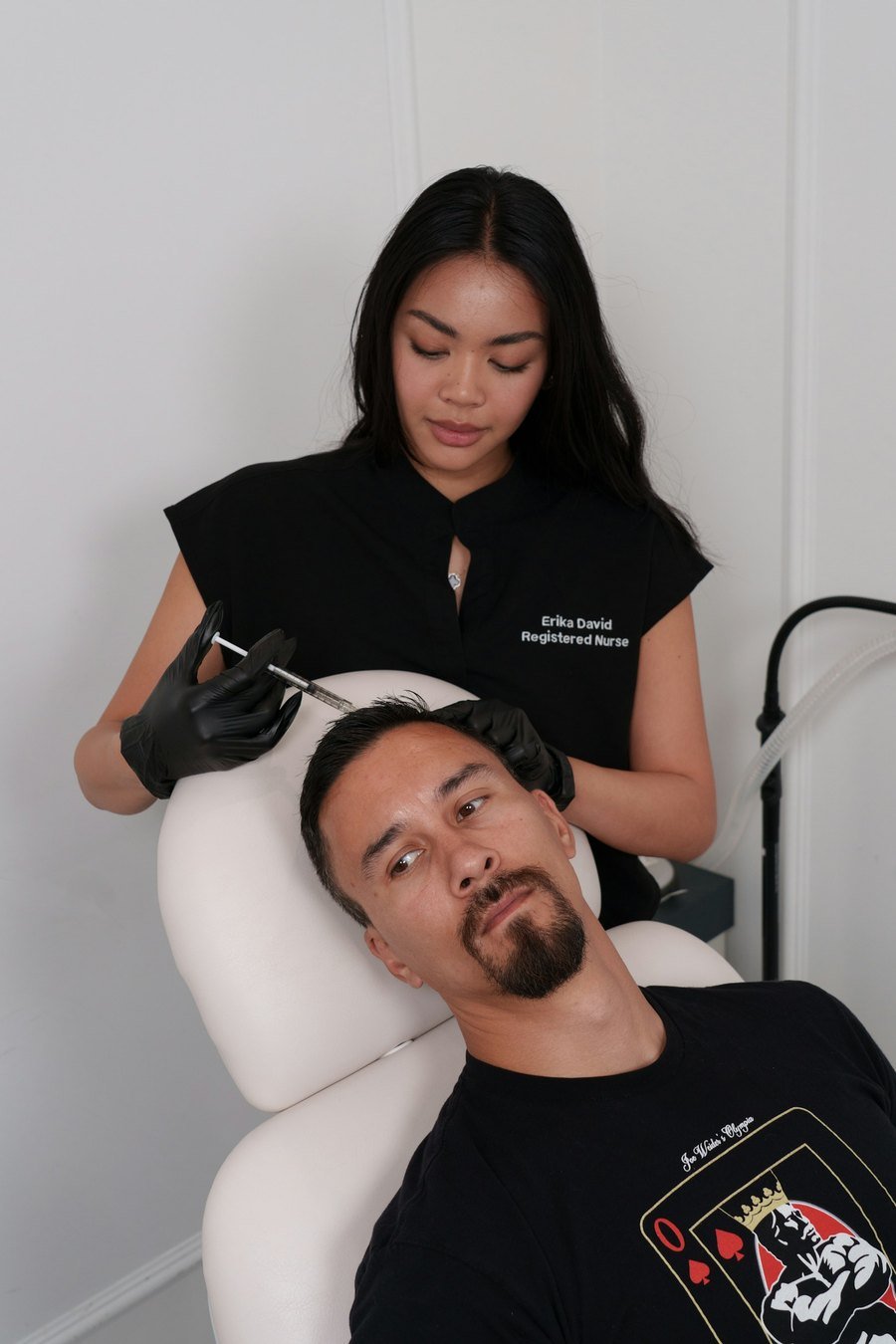
PRP is made with your own blood. A small amount is taken from the arm, as in a routine blood test, the tube goes into the centrifuge and there the components are separated until the plasma fraction concentrated in platelets is left. That plasma is then applied to the scalp with micro-injections. The draw, the centrifuging and the application are all done in the same visit.
Platelets concentrate growth factors that the body uses to repair tissue. Taking them to the scalp aims to improve the environment of the follicle that is still active. There are studies describing improvements in density and thickness in certain profiles, especially in androgenetic alopecia, but the response is individual and cannot be taken for granted.
What sets it apart: no external substance is introduced, so there is no risk of allergy or of rejection of the material. In exchange it requires a blood draw, a longer session, informed consent and a medical assessment that looks at your history, your medication and, where appropriate, a blood test.
Compared with anti-hair-loss mesotherapy, which works with prepared actives and shorter, more frequent sessions, PRP concentrates the treatment into few sessions a year and uses your own plasma. They are not opposing options: in many plans they coexist, and which one fits better depends on your case.
The prior step is always the diagnosis. At the hair consultation we define what type of loss you have and what phase it is in, because PRP makes sense when there is still living follicle to work with. If it is not indicated, we tell you.
Who does it make sense for?
PRP is considered when there is still living follicle to work with. The more advanced the loss, the less margin there is, and that is said before starting, not afterwards.
Situations in which it is considered
- Androgenetic alopecia in an initial or moderate phase
- Hair that is thinning at the crown and in the frontal area
- Loss of density with the follicle still active
- Diffuse shedding after a period of stress or illness
- Reinforcement of the hair plan when more support is needed
- Support for a hair transplant, if the doctor indicates it
- Men who prefer a treatment using their own material
Common reasons for consultation
- You have been on treatment for a while and want to add something more
- You notice the crown looking thinner in photos
- You want something that does not introduce external substances
- You are concerned about adding more products to your medication
- You prefer to concentrate the treatment into few visits a year
- You want to know what can genuinely be expected and what cannot
What is the session like, step by step?
-
Medical assessment and diagnosis
The scalp, the pattern of loss, your medical history and your medication are reviewed. If needed, a blood test is requested beforehand.
-
Indication and informed consent
The procedure, its limits and its risks are explained, and the consent form is signed before anything is done.
-
Blood draw
A small amount of blood is taken from the arm, with the same procedure as a routine test.
-
Centrifuging the plasma
The tube goes into the centrifuge, which separates the components of the blood and leaves the plasma fraction concentrated in platelets.
-
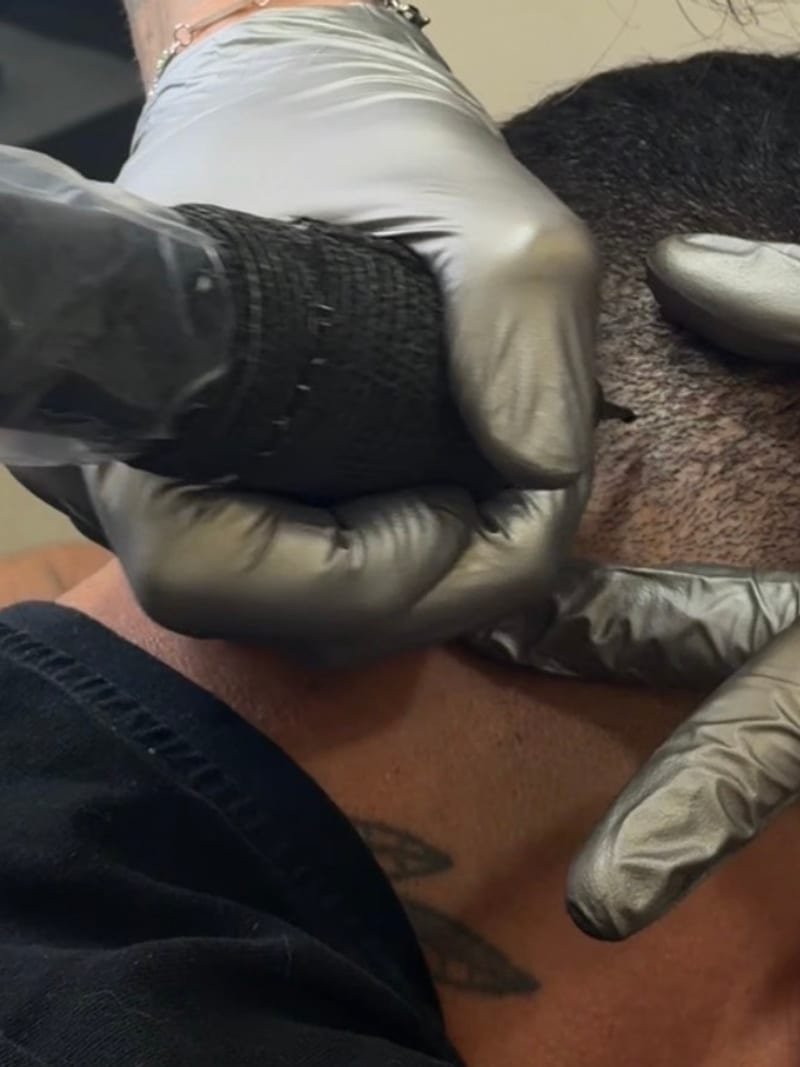
Application on the scalp
The plasma is injected with a fine needle in micro-doses spread across the area to be treated. Between the blood draw, the preparation and the application, the visit takes around 45 to 60 minutes.
-
Session protocol
The most usual scheme is three or four sessions about a month apart.
-
Maintenance and reviews
Once the initial course is finished, one or two sessions a year are usually prescribed, adjusted according to progress at the reviews.
What this approach adds
- Your own plasma is used, with no external substances
- No risk of allergy or of rejection of the material
- The whole process is resolved in the same visit
- A defined protocol, with an initial course and maintenance
- It concentrates the treatment into few visits a year
- Compatible with the baseline treatment you are already following
- Progress compared at reviews, not judged by eye
- If it is not indicated in your case, it is not done
Care before and after
Before the session
- Come hydrated and without a long fast, because blood is drawn
- Come with clean, dry hair and no product in it
- Tell us about your medication, especially anticoagulants and antiplatelet drugs
- Discuss with the doctor any anti-inflammatories taken in the days beforehand
- Tell us about any clotting problem, anaemia or blood disorder
- Do not come with an infection, a wound or a flare-up on the scalp
- Avoid alcohol and tobacco in the hours beforehand
After the session
- Do not wash your hair for the first few hours, unless told otherwise
- Do not massage or scratch the area on the first day
- Avoid caps and helmets for the rest of the day
- Avoid intense exercise, sauna and swimming pools for 24-48 hours
- Avoid direct sun on the scalp
- Ask us before taking anti-inflammatories for the discomfort
- Leave hair colouring for a few days afterwards
After the session it is normal for the scalp to feel red, sensitive or somewhat swollen, and a small bruise may be left on the arm where the blood was taken. It usually goes within two or three days. If intense pain appears, an area that gets worse, pus or a fever, get in touch with us.
Frequently asked questions
Is it my own blood and how much is taken?
Yes, it is your own blood. A small amount is taken, on the order of a routine test, it is centrifuged in the clinic itself and applied in the same session. No substance foreign to your body is introduced.
How many sessions and how often?
The usual protocol is three or four sessions about a month apart. After that you move on to maintenance, normally one or two sessions a year, depending on how things develop.
When is anything visible?
It is not immediate. The first thing that usually changes is the shedding. Changes in density and thickness start to be assessed from the third month and more clearly towards the sixth, by comparing at the reviews.
Does it hurt?
The draw is the typical prick in the arm. On the scalp you feel the pricks and some pressure; it is well tolerated and cold or a topical anaesthetic can be used if you are sensitive.
Are there cases where it cannot be done?
Yes. Clotting problems, low platelets, blood disorders, anticoagulant or antiplatelet treatment, an active infection in the area, autoimmune conditions or an active cancer mean it has to be ruled out or studied thoroughly. It is a medical procedure and that is why there is a prior assessment.
Are blood tests needed?
In some cases yes. If your medical history or your medication make it advisable, we ask for one beforehand to check that everything is in order.
Can I go back to work the same day?
Yes. It requires no time off and no recovery. The scalp may be sensitive and red for a few hours and there may be some discomfort in the arm.
Can it be combined with hair mesotherapy or with the treatment I am already on?
Yes, it is usual within a hair plan. What is organised is when to do each thing, so as not to overlap two procedures on the same scalp on the same day.
We assess whether PRP fits you
We review your scalp, your medical history and your medication, and explain the full protocol before you decide.
Book an appointmentKeep looking