Ageing eyes
Treatment of the upper third and the area around the eyes: dark circles, hollow temples, a dropped brow tail and a tired-looking face
About the treatment
What does it involve?
The eyes are the first thing to give tiredness away. Over the years the bone of the orbit widens, the fat that filled the eyelid is reabsorbed, the temple hollows out and the eyebrow loses height on the outside. The result is an eye that looks smaller, more sunken and always tired, even if you sleep well.
This treatment focuses on the upper third of the face and the periocular area. It is not a single product: the technique is chosen according to what is failing, because the same dull-eyed look can come from a shadow, from a hollow or from poor-quality skin.
The first thing is to know what type of dark circle you have. The bluish-toned one depends on the vessels and on very thin skin. The brown one is pigment. And there is a third that is not colour but shadow: the tear trough has emptied and the light falls into a hollow. Each responds to different things and mixing them up is the most common mistake.
Depending on the case we work with low-density filler material in the trough and in the temple, with regenerative injectables that improve the thickness and elasticity of the thin skin of the contour, or with the injectable treatment for expression lines when what is closing the gaze is the muscle pulling the tail of the eyebrow downwards.
It is one of the most delicate areas of the face, so here the medical assessment is not a formality. If what you have is a fat bag or excess skin on the eyelid, injectables are not the solution and we will tell you so plainly.
What is assessed around the eye?
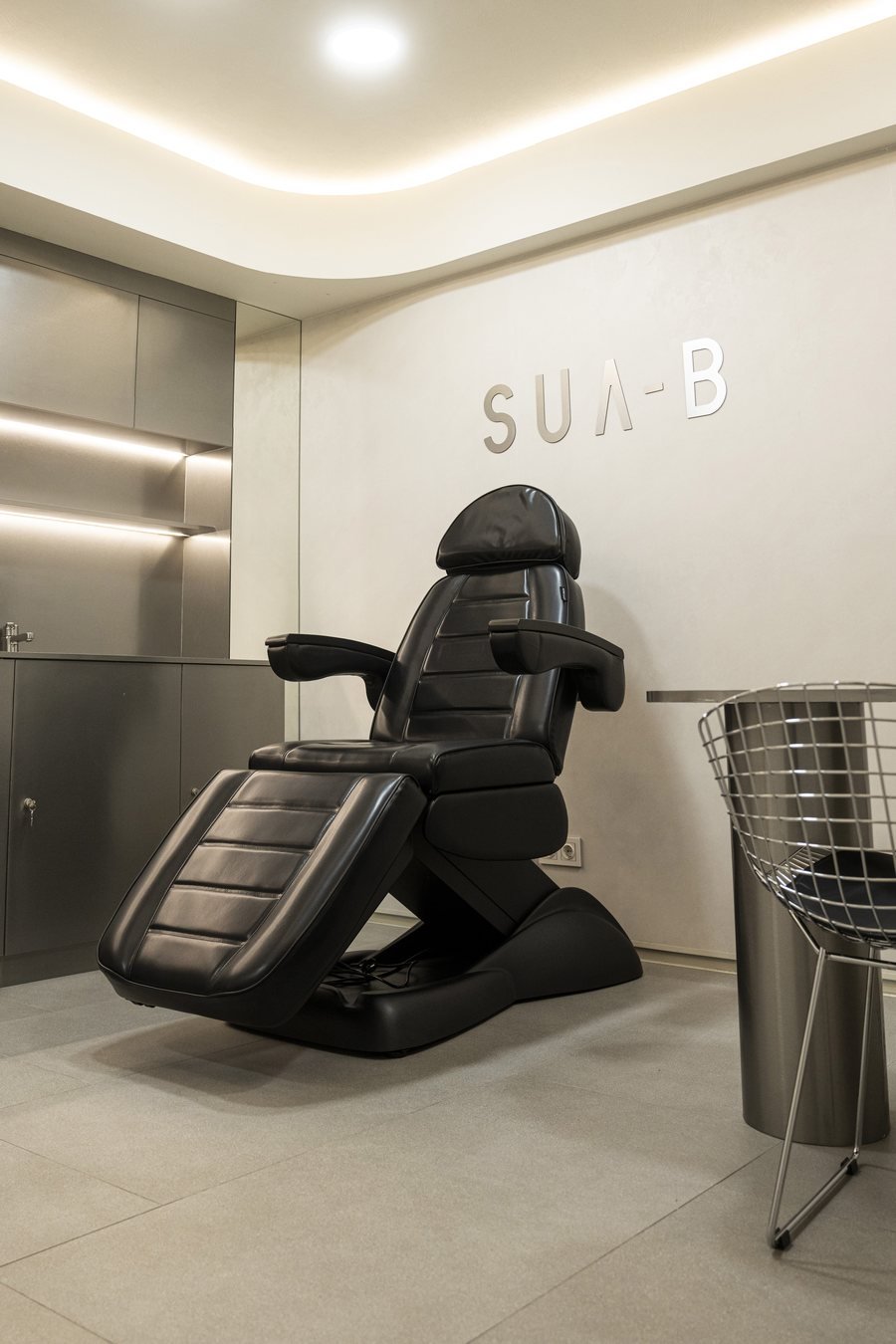
The gaze is not fixed by looking at the eye alone: we look at the whole frame, from the eyebrow to the cheekbone.
What can be treated
- A hollowed tear trough that creates shadow
- A bluish-toned dark circle from thin skin
- A brown dark circle from pigment
- Hollowed temples that narrow the gaze
- A dropped eyebrow tail
- Loss of support at the edge of the cheekbone
- Thin, crepey skin of the eye contour
- Fine lines that show when you smile
Common reasons for consultation
- People ask whether you slept badly when you slept well
- In photos your eyes come out looking dull
- Sunglasses have become your permanent fallback
- You notice your eyes looking more closed than they did a few years ago
- The shadow under your eye does not go with rest
- Concealer is not an option for you
- You want to look fresher without anything showing
What is the treatment like?
-
Study of the gaze
The height of the eyebrow, the hollow of the temple, the edge of the orbit and the support of the cheekbone are assessed, at rest and in movement.
-
Type of dark circle
With light and pressure we can tell whether the dark circle is vascular, pigmentary or caused by hollowing. The whole strategy depends on this.
-
A plan by layers and in order
It is decided what is treated first: support, shadow or skin quality. Almost never is everything done on the same day.
-
Disinfection and anaesthetic cream
Careful disinfection and anaesthetic cream. Around the eye we work slowly and with small amounts.
-
Injection
A cannula in the areas of vascular risk and a very fine needle at the superficial points, depending on what has to be treated.
-
Cold and checking
Local cold to limit the swelling and a review of the result under front and side lighting.
-
Review of the settled result
Once the swelling has gone down, we assess whether it needs completing or whether to move on to the next step of the plan.
What it achieves
- Less shadow under the eye
- A more open, clearer gaze
- A temple with support, a less angular upper face
- Thicker, more elastic skin around the eye
- A rested appearance in photos and on video
- An outpatient procedure, with no operating theatre
- Reabsorbable materials
- A plan in phases, with the option to stop
Care before and after
Before the treatment
- Tell us if you take anticoagulants, antiplatelet drugs or supplements that encourage bleeding
- Tell us about allergies and any history of eye problems or cold sores
- Postpone the appointment if you have conjunctivitis, a stye or an active infection
- Avoid alcohol and very salty food in the 24 hours beforehand
- Come with a clean face and no creams
- Set aside a few days' margin before any event
After the treatment
- Apply gentle cold for the first few hours if we tell you to
- Do not rub or press the eye contour
- Sleep with your head slightly raised for the first two nights
- Avoid intense exercise for 24-48 hours
- Avoid sauna, steam and intense heat for 72 hours
- Use sun protection on the area daily
- Go back to creams with acids or retinol after a few days
The eye contour is the area of the face that swells the most and where a small bruise appears most easily: it can show for between three and seven days. It is to be expected and temporary. If you have any discomfort that does not fit this, get in touch with us.
Frequently asked questions
Will my dark circles go completely?
It depends on the type. The shadow caused by hollowing is the one that responds best. Pigment improves more slowly and progressively, and the vascular dark circle caused by very thin skin is worked on above all by improving the quality of the skin. At the assessment we tell you what real margin there is in your case.
Does it hurt?
It is a sensitive area, but manageable. Anaesthetic cream is used and, for much of the work, a cannula rather than a needle. What bothers people most is usually the feeling of pressure, not the prick.
Does it work for eye bags?
Not always. If the bag is fat that protrudes or there is excess skin on the eyelid, an injectable can make the appearance worse and the solution is a different one: in those cases we do not treat and we guide you on who to go to.
How many sessions are needed?
Filling a shadow or a temple can be resolved in one session with a later review. Regenerative treatments for the skin of the eye contour are usually planned over 3 sessions 2-3 weeks apart.
How long does the result last?
In the periocular area the filler material usually lasts a good while, often around 9 to 12 months. Skin quality treatments need maintenance once or twice a year.
Can I go to work afterwards?
Yes, although it is worth being foresighted here: if you have an important meeting or a recording, it is better to leave a few days' margin because of the possible swelling.
Is it reversible?
The filler material used in this area is reabsorbable and, if necessary, can be dissolved with a specific medical treatment. The regenerative products are reabsorbed on their own.
In what order is it combined with other treatments?
Yes, and that is the usual approach: support first, skin quality afterwards. The order and the timings are defined at the medical assessment so as not to overlap two things on the same day unnecessarily.
Do not let your eyes speak for you
We assess what is going on with your eye contour, what can be improved and what makes no sense to touch.
Book an appointmentKeep looking
Injectable facials
-
 Facial harmonisation
45-60 minutes
-
 Full face
60-90 minutes
-
 Jawline definition
30-45 minutes
-
 Chin correction
20-30 minutes
-
 Cheekbone filler
30-40 minutes
-
 Temple filler
20-30 minutes
-
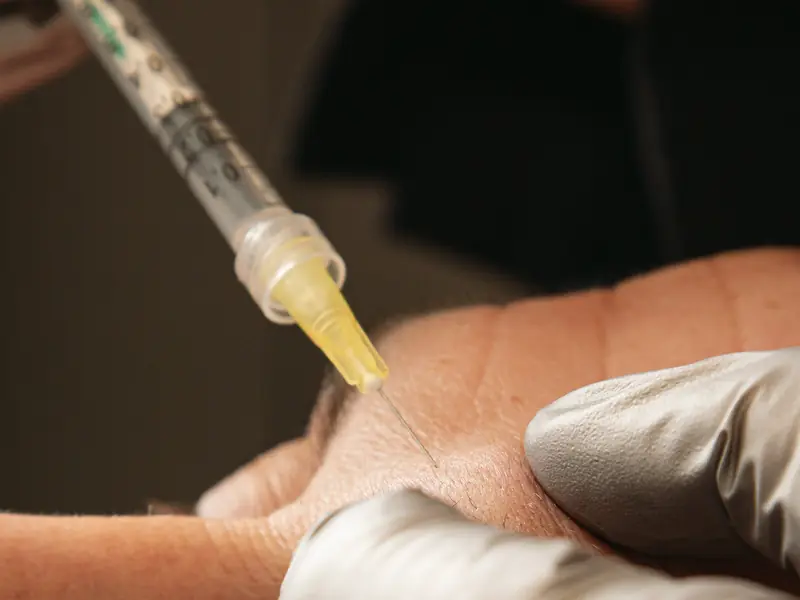 Tear trough filler
30-45 minutes
-
 Lip filler and hydration
20-40 minutes
-
 Non-surgical nose reshaping
30-45 minutes
-
 Nasolabial fold
40-60 minutes
-
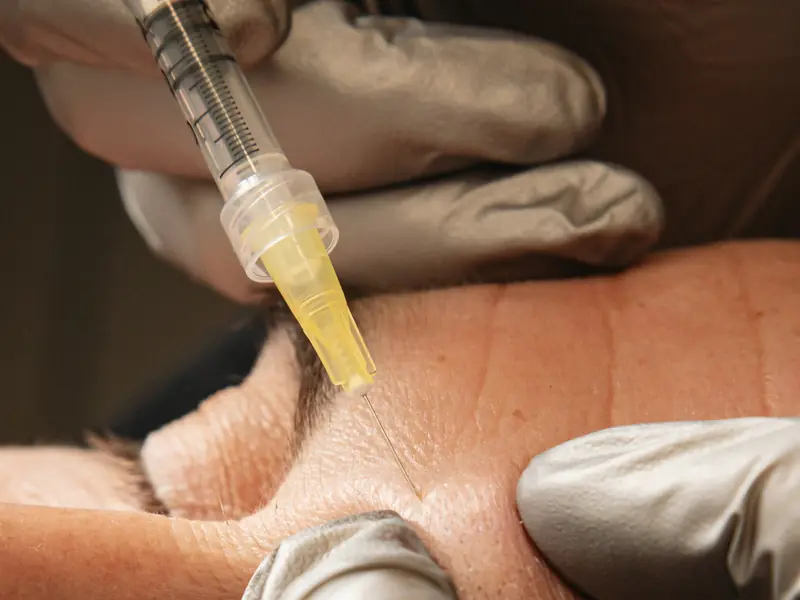 Wrinkle treatment
20-30 minutes
-
 Facial mesotherapy with vitamins
30-40 minutes
-
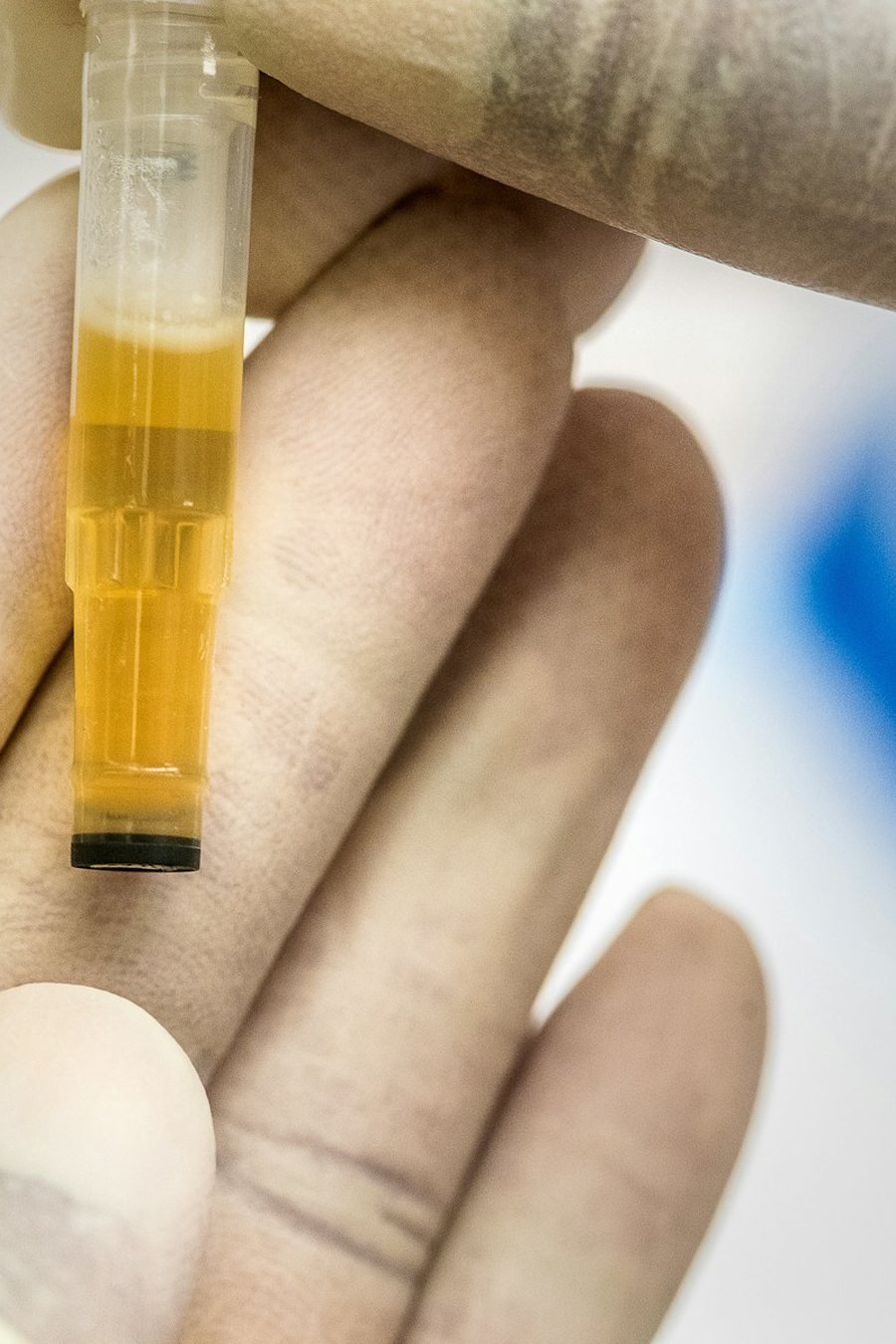 Polynucleotides
25-40 minutes
-
 Collagen stimulator (Radiesse)
30-45 minutes
-
 Collagen stimulator (Sculptra)
40-60 minutes
-
 Facial PRF
45-60 minutes
