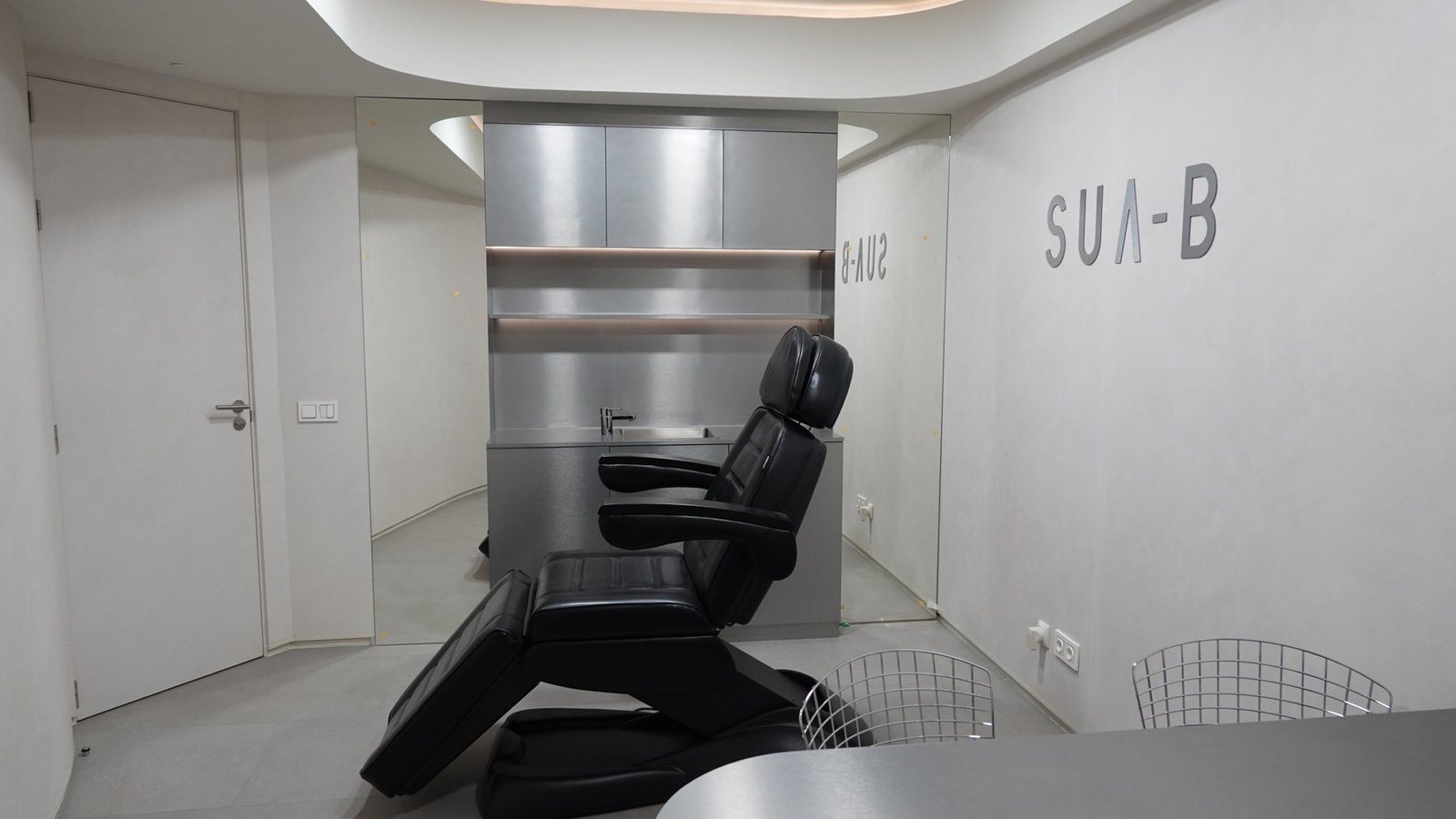
Cheekbone filler
Support and projection of the middle third with hyaluronic acid: a high, flat cheekbone, with masculine judgement and no filled look
About the treatment
What does it involve?
The middle third is the part of the face that runs from the lower eyelid to the nose and from there towards the ear. It is the pillar that holds up everything below it. When it loses support, the first thing that appears is not a hollow in the cheekbone: it is a more marked dark circle, a deeper nasolabial fold and a face with a dull look.
That is why this treatment is called a filler but works as structure. Firm hyaluronic acid is injected at specific points of the malar bone to restore the support and, from there, lift the tissue that has descended.
The male cheekbone is not treated the same way as the female one, and this is what we are asked about most. In women the aim is a cheekbone that is higher, rounder and more forward; in men, a cheekbone that is flat, placed high and with the projection to the side, respecting a cheek without curves. Transferring the female pattern to a male face is exactly what produces that puffed-up face nobody wants.
The technique combines two planes. The deep deposits, resting on the bone, are done with a needle; the lateral area and the transition to the temple and the cheek are distributed with a cannula, which better respects the vessels of the region and reduces the risk of bruising.
The amount is decided at the medical assessment, looking at your bone structure, your facial fat and the quality of your skin. In many men the cheekbone is not the priority: if your case is better resolved in another area or within a plan of facial harmonisation, we will tell you so.
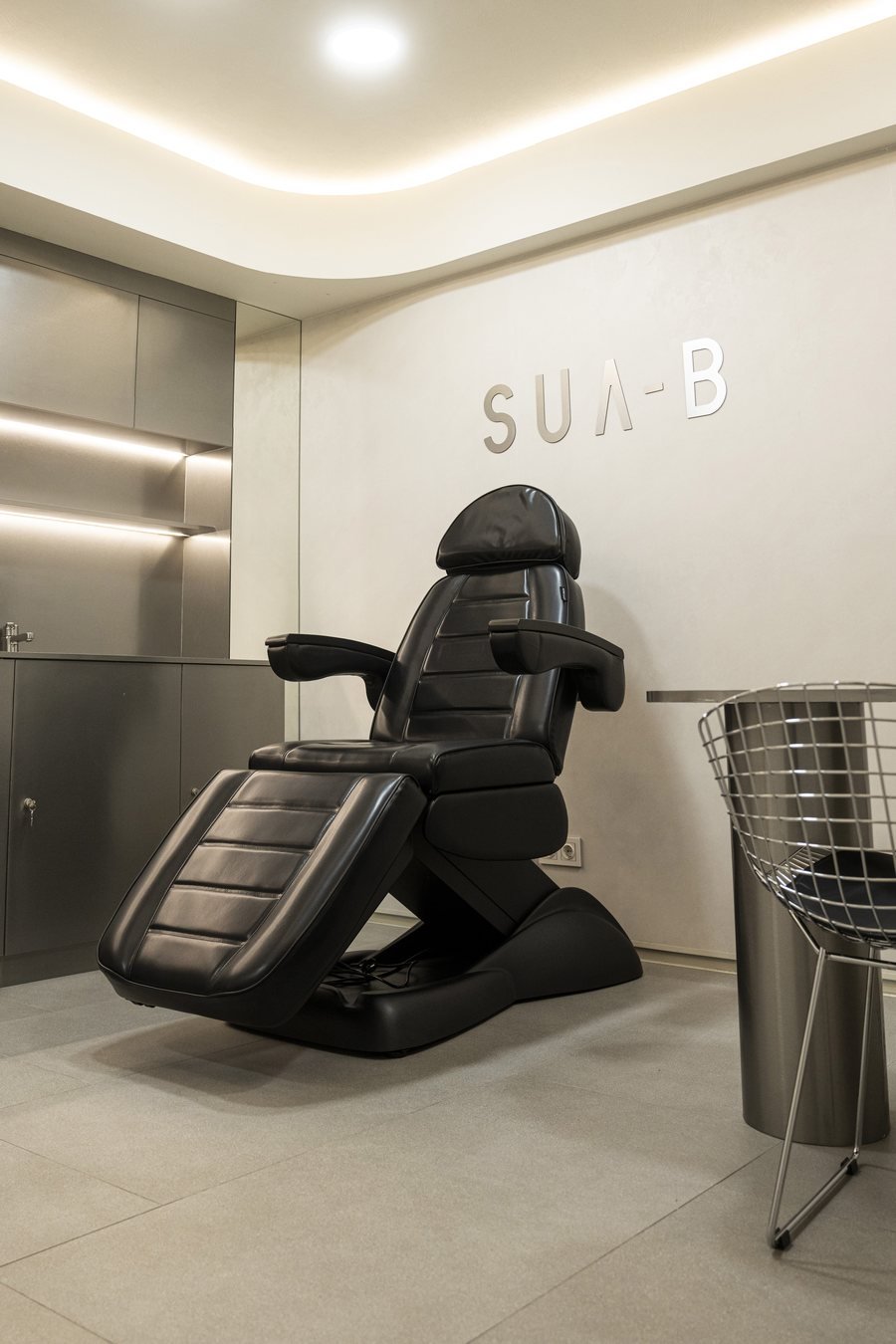
What is worked on in the middle third
The whole cheekbone is not injected. Two or three support points are chosen and the effect they produce on the surrounding areas is checked.
What can be improved
- A cheekbone with no lateral projection
- Loss of volume in the upper cheek
- A hollow under the lower eyelid
- A nasolabial fold marked by descent of the tissue
- A step between cheekbone and dark circle
- A hollow cheek in slim faces
- A difference in projection between the two sides
- A flat look to the face in photos from the front
What we hear in the consultation
- A dull face even when you sleep well
- On video and on screen your face looks dropped
- You have lost weight and your face showed it first
- Shadows under the eyes that do not come from colour
- A wish to improve the gaze without touching it directly
- An explicit fear of ending up with a filled-up face
How the session unfolds
-
Assessment and palpation of the bone
The malar rim is located, the fat of the cheek is assessed and your medical history is reviewed.
-
Choosing the support points
Two or three points per side are marked, high and lateral, avoiding the central area of the cheek.
-
Preparing the area
The cheek and the temple are disinfected and the anaesthetic cream is left to work for a few minutes.
-
Deep deposits with a needle
Small amounts resting on the bone: it is the plane that restores support without fattening the face.
-
Lateral distribution with a cannula
The transition to the temple and to the cheek is blended so that no visible edge is left.
-
Checking in movement
The result is reviewed while smiling and from several angles, comparing both sides.
-
Check at three weeks
With the material settled, we assess whether the support achieved is enough or whether an adjustment is needed.
What it adds
- A cheekbone with lateral, not frontal, projection
- A middle third with its support restored
- A less sunken, more rested gaze
- A nasolabial fold indirectly softened
- A clean transition between dark circle, cheekbone and temple
- A defined face without gaining apparent volume
- Slight asymmetries compensated for
- Reabsorbable material, adjustable over time
Care before and after
Preparation
- Tell us about your medication, allergies and previous injections in the face
- Stop alcohol 24 hours beforehand and do not turn up hungover
- Leave retinoids and acids for a couple of days if they irritate your skin
- Postpone it if you have sinusitis, a cold sore or an active infection
- Come without make-up and with clean skin
The following days
- Gentle cold for the first few hours, without pressing the cheekbone
- Sleep on your back the first night
- No intense gym or cycling for 24-48 hours
- No sauna, hammam or strong sun exposure for 72 hours
- Do not have facial massages or clinic cleanses for two weeks
- Daily sun protection on the whole face
In the middle third the swelling is somewhat more visible than in the jaw and may make you look fuller than expected on the first day: that is not the final result. Redness, small bruises and a feeling of firmness to the touch are usual and generally resolve within a few days. If increasing pain, paleness or blurred vision appear, get in touch with us immediately.
Frequently asked questions
Is it not going to leave me with a filled-up face?
That effect comes from placing a lot of product in the centre of the cheek and in a superficial plane. Here we work high, lateral and deep, with small amounts. If the starting point requires more, it is done in two stages rather than all at once.
How is it different from a female cheekbone?
In the shape and in the position. The male one is left flat and with the projection outwards, keeping the cheek straight; the female one is made rounder and more forward. It is the same substance and a different plan.
Does it work for my dark circles?
Sometimes. If the dark circle is due to the step caused by lack of cheekbone support, it improves once that support is restored. If it is pigmentary in origin or caused by excess skin, the cheekbone is not going to fix it and it is worth assessing separately.
How long do the results last?
The usual in this area is 12 to 18 months, somewhat longer than in areas of a lot of movement. The material used, the amount, your metabolism and whether you do intense sport all have an influence.
How many days until I look normal?
You can go back to work the same day. The initial swelling goes down within 48-72 hours and the result is considered final at two or three weeks, once the product has integrated.
Why is a cannula used at some points?
Because the middle third has important vascular structures. The cannula has a blunt tip, it advances between the tissues instead of piercing them and it lowers the risk of bruising and of vascular complications in the lateral areas.
Can it be combined with skin treatments?
Yes, and it is common: volume gives structure and skin quality treatments improve the surface. What is organised is the calendar, so as not to do both things on the same day on the same area.
What happens if I stop having treatment?
The material is reabsorbed little by little and the area gradually returns to its previous state. There is no rebound effect and no worsening: the added support simply stops being there.
The assessment first, then the plan
We see whether your middle third needs support, how much and where. And if it does not need it, we tell you that too.
Book an appointmentKeep looking
Injectable facials
-
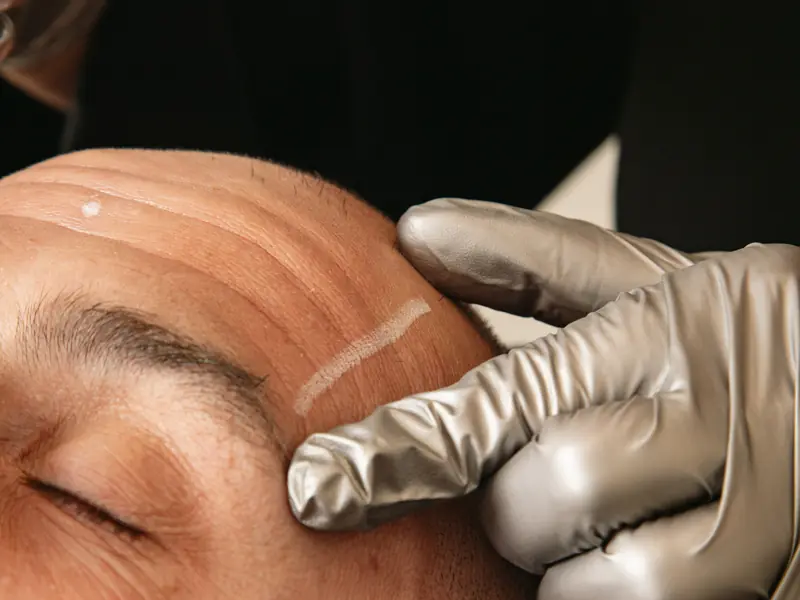 Facial harmonisation
45-60 minutes
-
 Full face
60-90 minutes
-
 Jawline definition
30-45 minutes
-
 Chin correction
20-30 minutes
-
 Temple filler
20-30 minutes
-
 Tear trough filler
30-45 minutes
-
 Lip filler and hydration
20-40 minutes
-
 Non-surgical nose reshaping
30-45 minutes
-
 Nasolabial fold
40-60 minutes
-
 Ageing eyes
30-45 minutes
-
 Wrinkle treatment
20-30 minutes
-
 Facial mesotherapy with vitamins
30-40 minutes
-
 Polynucleotides
25-40 minutes
-
 Collagen stimulator (Radiesse)
30-45 minutes
-
 Collagen stimulator (Sculptra)
40-60 minutes
-
 Facial PRF
45-60 minutes
