Anti-hair-loss hair mesotherapy
Micro-injections into the scalp aimed at reducing hair loss and strengthening the hair you still have, always after a diagnosis
About the treatment
What does it involve?
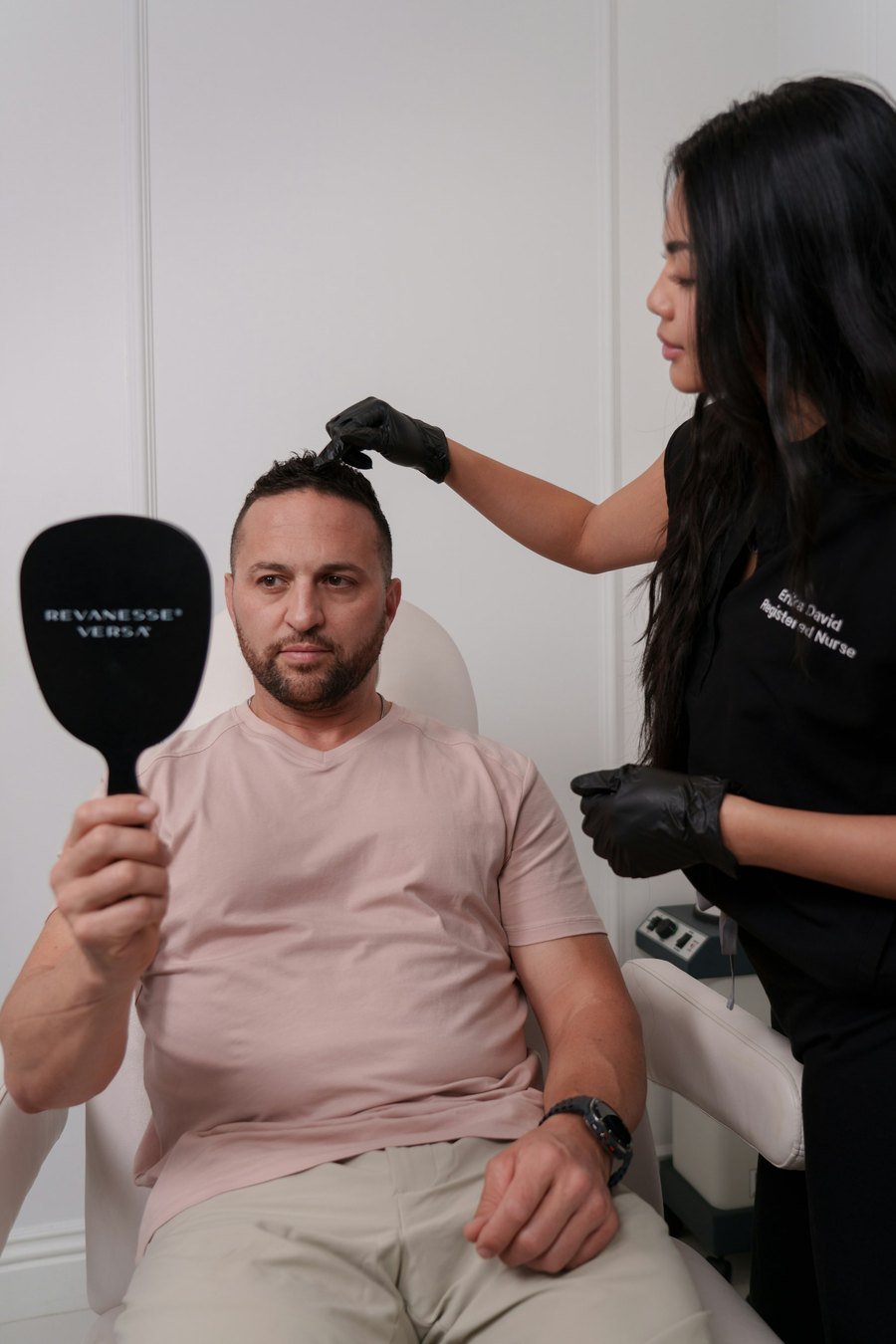
Very superficial micro-injections are applied across the area of the scalp where you are losing density. The idea is simple: take the active to where the follicle is, in small doses and locally, rather than waiting for it to get there by another route.
The aim is to slow the rate of shedding and help the hair you have hold up better: less hair in the shower, a shaft with a little more body and a scalp in better condition. It is not a cure for hair loss and it does not create new follicles where nothing is left.
It works as a supporting treatment within a plan, not as a substitute for anything. It performs better when it accompanies the baseline treatment the doctor has prescribed and when it is kept up consistently. With recent hair loss there is more margin than with a loss of many years.
If what concerns you is not the shedding but the quality of the hair or an irritated or oily scalp, the approach is a different one: that is worked on with hair mesotherapy with vitamins.
Before injecting anything we have to know why your hair is falling out. That step is the hair consultation: the pattern of loss is studied, your medical history and medication are reviewed, and it is decided whether this treatment adds anything in your case. If it does not, we tell you.
In what situations is it considered?
It is not a treatment for just anyone or at any time. It depends on the type of hair loss, how long it has been active and how much living follicle is left to work with.
What the work is on
- Active hair loss that has started recently
- Increasingly fine hair at the crown
- A receding hairline that keeps gaining ground
- Density that is dropping without reaching bald patches
- A neglected scalp, with a poor base
- Strengthening the existing hair before it weakens further
- Support for the hair plan you are already following
- Support after a hair transplant, if the doctor indicates it
Common reasons for consultation
- You see much more hair in the shower or on the pillow
- Your parting looks wider and wider
- You recognise yourself less in photos taken from above
- There was early hair loss in your family
- You have spent months on shampoos and products without seeing anything
- You want to act now and not when there is no margin left
- You want medical judgement before starting anything
What is the treatment like?
-
Hair diagnosis
The scalp, the pattern of loss and your medical history are reviewed. Without a diagnosis there is no treatment.
-
Indication and session plan
The doctor decides whether mesotherapy adds anything in your case, with which actives and how many sessions it makes sense to prescribe.
-
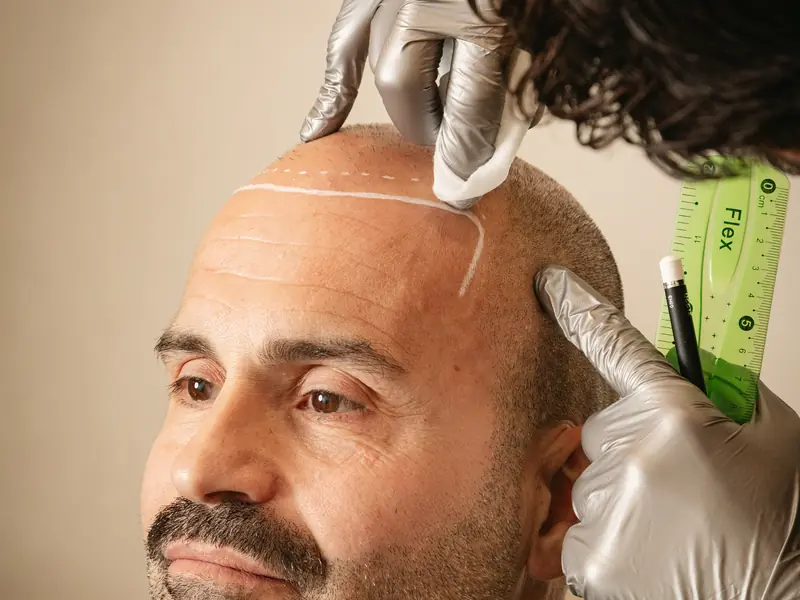
Cleansing and marking of the area
The scalp is disinfected and the areas to be treated are marked out.
-
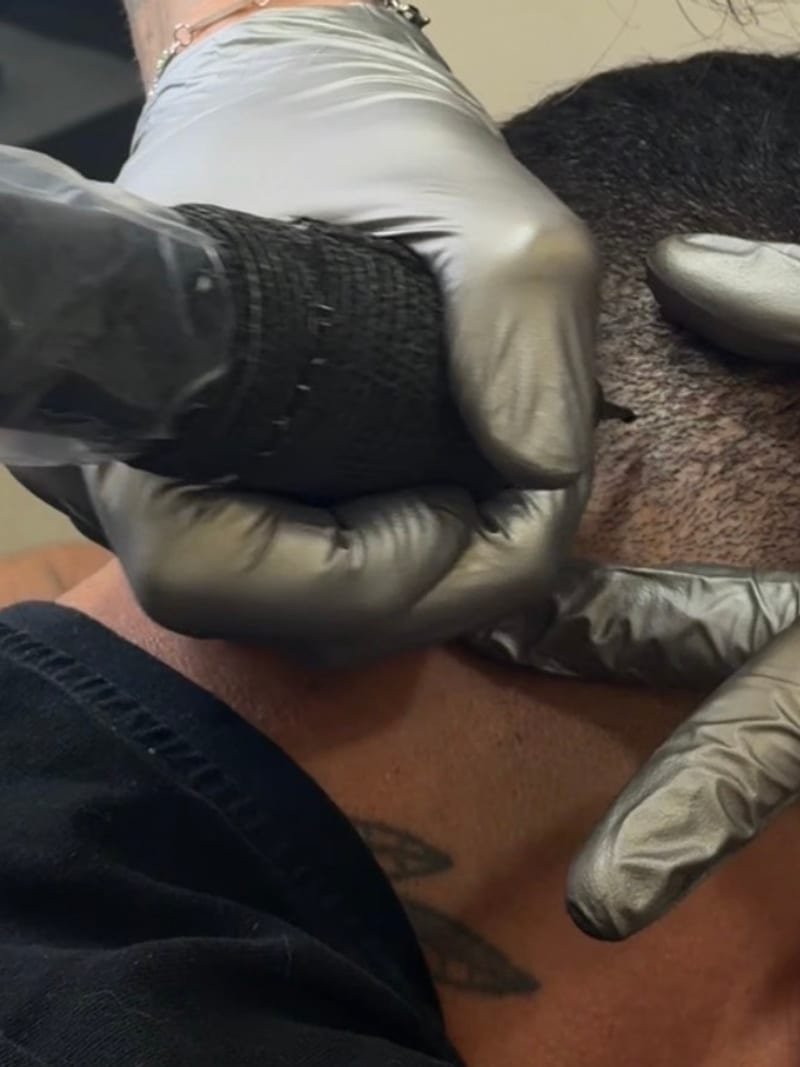
Superficial micro-injections
Many very small, spread-out pricks, with a fine needle and at shallow depth. The session takes around 20 to 30 minutes.
-
Initial course and maintenance
A common scheme is one session a month for the first few months, and then spacing them out according to the response.
-
Reviews and monitoring of progress
The scalp is compared at each review to decide whether to continue, change the plan or stop it.
What can reasonably be expected
- Less daily shedding in the first few months, in many cases
- Existing hair looking better and with a little more body
- A scalp in better condition
- Small doses applied to the specific area
- Short sessions, with no time off work
- It fits well with the baseline treatment you are already following
- Follow-up with reviews and medical judgement
- If it is not indicated, we tell you and it is not done
Care before and after
Before the session
- Come with clean, dry hair, without gel or mousse
- Come without hair fibres or powders that cover up the density
- Tell us about your medication, allergies and medical history
- Tell us if you take anticoagulants or antiplatelet drugs
- Do not come with a wound, dermatitis or an infection on the scalp
- Avoid alcohol in the 24 hours beforehand
After the session
- Do not wash your hair for the first few hours, unless told otherwise
- Do not scratch or massage the area on the first day
- Avoid caps and helmets for the rest of the day so the scalp can breathe
- Avoid intense exercise, sauna and swimming pools for 24-48 hours
- Avoid direct sun exposure of the scalp
- Put off colouring and bleaching for a few days
It is normal to feel stinging, redness or sensitivity for a few hours, and for some marks or a small bruise to remain, which disappear within a few days. If pain appears that does not go away, an inflamed area that gets worse, pus or a fever, get in touch with us.
Frequently asked questions
Does it hurt?
There are many pricks, but they are very small and very superficial. Most people describe it as uncomfortable and manageable. If your scalp is sensitive, cold or a topical anaesthetic can be applied before starting.
Does it stop hair loss?
Hereditary hair loss is a chronic, progressive process, and it is not stopped by an isolated technique. What is realistic is to try to slow the pace and keep what you have, with consistency and with the plan the doctor gives you.
Will new hair grow?
That is not what we are after nor what we promise. The work is on the follicle that is still alive, not on the one already lost. In areas with no follicle there is nothing to stimulate and there we assess other options.
How many sessions do I need?
There is no single number for everyone. A common scheme is one session a month for the first three to six months and then more spaced-out maintenance. It is defined at diagnosis and adjusted at the reviews.
How long before anything is noticeable?
Hair goes at its own pace. The first thing that usually changes is the shedding, within a few weeks. Any assessment of density or thickness makes sense from the third or fourth month, comparing the scalp with the starting point.
Are there cases where it cannot be done?
Yes. An infection or active dermatitis on the scalp, clotting problems, treatment with anticoagulants or antiplatelet drugs and an allergy to any of the components mean it has to be ruled out or studied thoroughly. That is why your medical history is reviewed beforehand.
Can I go back to work afterwards?
Yes. It needs no recovery and no time off. The scalp is just left somewhat sensitive and red for a while.
Can it be combined with other hair treatments?
Yes, that is the usual approach. It is combined with the baseline treatment and with other procedures in the hair plan. The order and the timings are set by the assessment, so as not to overlap two techniques on the same scalp on the same day.

Diagnose before treating
Book a hair assessment: we explain what is happening to you, whether anti-hair-loss mesotherapy fits your case and what it is reasonable to expect.
Book an appointmentKeep looking