Jawline definition
1 / 4
Treatments
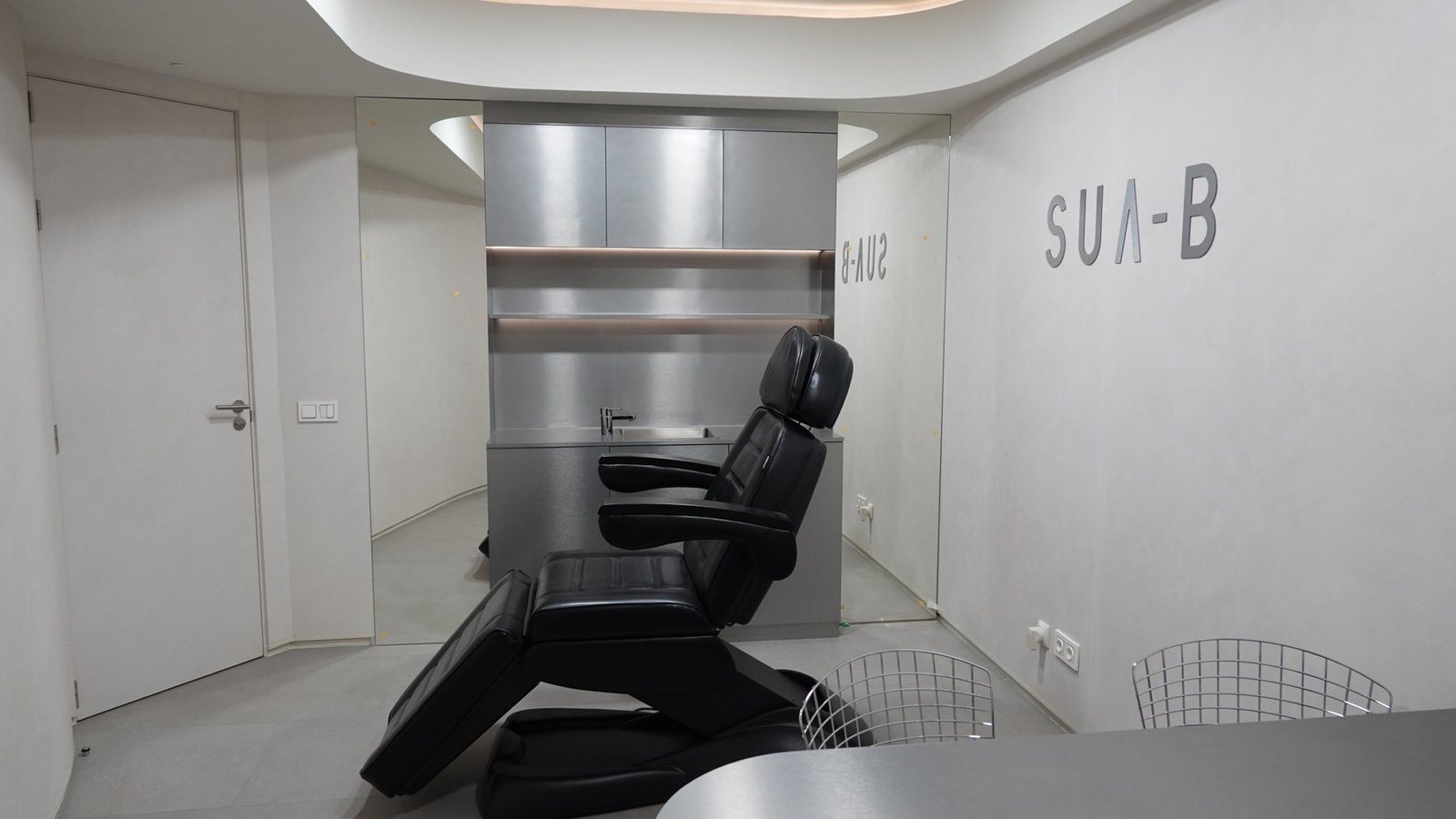
Definition of the angle and the border of the jaw with high-density hyaluronic acid. The treatment men ask for most in consultation
About the treatment
Defining the jaw means working on two things at once: the angle, just below the ear, and the border that runs from that angle down to the chin. When the angle is closed and the border blurred, the lower part of the face looks wide and with no boundary with the neck.
We use high-density hyaluronic acid, a firmer formula with more capacity to support the tissue than the one used in soft areas. At the angle it is deposited deep, resting on the bone, with a needle. The run along the border is done with a cannula, which passes under the skin without cutting and reduces the risk of bruising.
Here the male approach is what governs. In men what matters is a straight border, an open angle and a flat lateral face: no curves and no volume towards the cheekbone. It is structure, not filler. Done well, what you see is a more defined profile, not a face that has had work done.
If you are interested in the face as a whole and not just this area, facial harmonisation is the overall plan; jawline definition is the specific chapter on the lower third and, in many cases, the only one needed.
Before injecting there is a medical assessment: we look at your bone structure, the position of the bone, the fat of the neck and the skin. If your case is better resolved with something else, or you simply do not need anything, we tell you.
Before and after
Jawline definition
The jaw is not treated in its entirety by default. Depending on the case, the change comes from the angle, from the border or from the junction with the chin.
The bone is palpated and the angle, the border, the fat of the neck and the quality of the skin are assessed. Your medical history too.
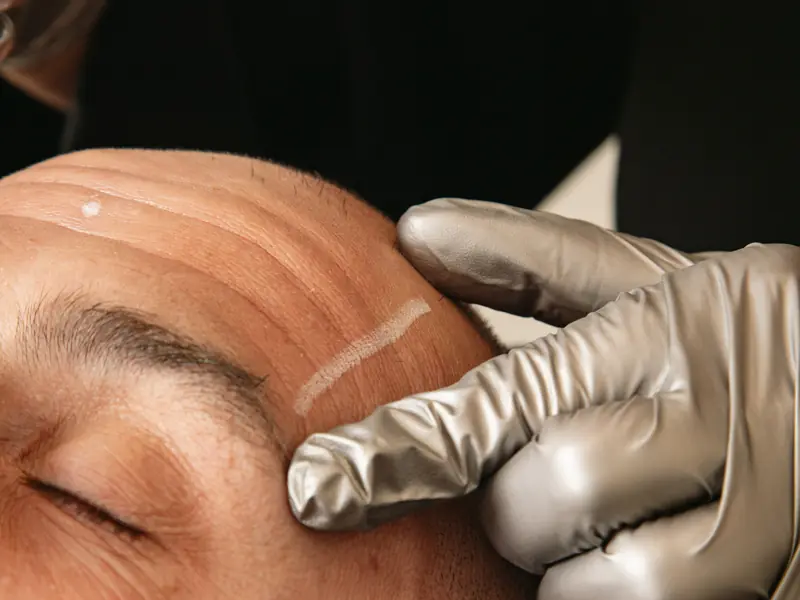
The run and the entry points are drawn. With this you see where the work will be done before we start.
The area is cleaned thoroughly and anaesthetic cream is applied a few minutes beforehand.
With a needle and in a deep plane, resting on the bone, to open the angle and gain lateral projection.
Linear passes beneath the skin along the jaw border, so that the line is continuous.
It is checked seated, standing and talking, comparing both sides before the session is considered finished.
Once the material has settled, we assess whether any point needs adjusting.
What is to be expected is a few days of mild swelling, a feeling of firmness to the touch and the odd bruise at the entry points. It resolves on its own within a few days. If the pain increases instead of going down, or the skin changes colour, get in touch with us as soon as possible.
For the first few days it feels firm to the touch, especially at the angle, because the material is dense and placed deep. After two or three weeks it integrates and stops being felt as something separate from the bone.
Partly. Defining the border improves the boundary between face and neck, but if the main problem is submental fat, the jaw alone does not resolve it. At the assessment we tell the two apart and set out the logical order for you.
That is not the aim. We work in phases and with measured amounts: we are after a defined angle, not a bigger face. If definition is lacking at the review, more is added; removing is more awkward than adding.
Usually between 12 and 18 months. The jaw moves little and is treated with more cross-linked material, so it tends to last longer than areas such as the lips. It depends on your metabolism and the amount used.
It is better to let 24-48 hours pass. Heat and increased blood flow encourage swelling and bruising. Walking and normal activity do not need to be stopped.
Many cases are resolved in one, with a fine adjustment at the review. When the starting point has little bone support, it is planned over two sessions a few weeks apart so as to see the effect on the whole.
Hyaluronic acid is reabsorbable and, if necessary, there is a specific medical treatment that dissolves it. It is one of the reasons for starting here before considering surgical options.
No. After the first few days you can shave normally, with a blade or a trimmer. The material goes in a deep plane and does not affect the follicle or hair growth.
At the assessment we study your structure, explain what can and cannot be defined, and you decide.
Book an appointmentKeep looking
 Facial harmonisation
45-60 minutes
 Full face
60-90 minutes
 Chin correction
20-30 minutes
 Cheekbone filler
30-40 minutes
 Temple filler
20-30 minutes
 Tear trough filler
30-45 minutes
 Lip filler and hydration
20-40 minutes
 Non-surgical nose reshaping
30-45 minutes
 Nasolabial fold
40-60 minutes
 Ageing eyes
30-45 minutes
 Wrinkle treatment
20-30 minutes
 Facial mesotherapy with vitamins
30-40 minutes
 Polynucleotides
25-40 minutes
 Collagen stimulator (Radiesse)
30-45 minutes
 Collagen stimulator (Sculptra)
40-60 minutes
 Facial PRF
45-60 minutes
