Full face
An overall aesthetic medicine plan: the whole face is treated area by area, in one or several sessions, with a view of the whole
About the treatment
What does it involve?
Full face is a complete plan for the whole face. Instead of coming for one area and returning months later for another, the entire face is studied at once, it is decided what each third needs and it is carried out in one long session or in a sequence of sessions planned from the start.
The work goes by layers and in order: first the deep support that holds the structure, then the contour and the profile, and finally the detail and the quality of the skin. It can combine filler material, collagen stimulators, injectables for expression lines and skin treatments, always according to what the doctor indicates in your case.
How is it different from facial harmonisation? In the scope. Facial harmonisation is an approach: balancing proportions by touching the few points that unbalance the rest, with very little product and very selectively. Full face uses that same approach, but applies it to every area of the face, including those that have nothing to do with proportions: the expression of the forehead, the shadows around the eyes, the skin of the neck or the lines of the folds. One resolves an imbalance; the other brings the whole face up to date.
That is why it tends to be of interest from the age of forty, or when you have already had isolated treatments and notice that the improvement in one area shows up the one next to it. And the other way round too: if what is bothering you is one single thing, full face is not your treatment and we will tell you so at the assessment.
Nothing is decided on the fly. We start from a medical assessment with photography and a study of proportions, and from that comes a written plan with areas, order, sessions and maintenance. You decide how far you want to go and you can stop at any phase.
What is included in a full face plan?
Not every area is included in every case. What is included is what the doctor considers adds something, ordered from what changes the most to what changes the least.
Areas the plan can include
- Upper third: forehead, brow and temples
- Eye contour and tear trough
- Cheekbone and zygomatic arch
- Nasolabial folds and corners of the mouth
- Chin and projection of the profile
- Jawline and angle
- The nose and its profile, without surgery
- Skin quality, pores and texture
- Neck and under the chin
Common reasons for consultation
- You see your face looking dull as a whole, not one particular area
- You have already had something treated and now the rest looks out of place
- You have lost weight and your face has been left looking empty
- You want to organise a plan instead of improvising
- You are turning a certain age and want to arrive there in good shape
- You are back in photos, video or meetings every day
- You prefer to resolve it in few visits
What is the treatment like?
-
Overall study with photography
The face is documented from the front, in profile and in movement, and proportions and facial thirds are measured.
-
A map of areas and priorities
All the areas open to treatment are listed and put in order by their real impact on the whole.
-
A written plan by sessions
We define what is done in the first session, what is left for the next one and how much time in between.
-
Preparing the session
Full disinfection and anaesthetic cream on all the planned areas. The session is long, so we work calmly.
-
Treatment by areas
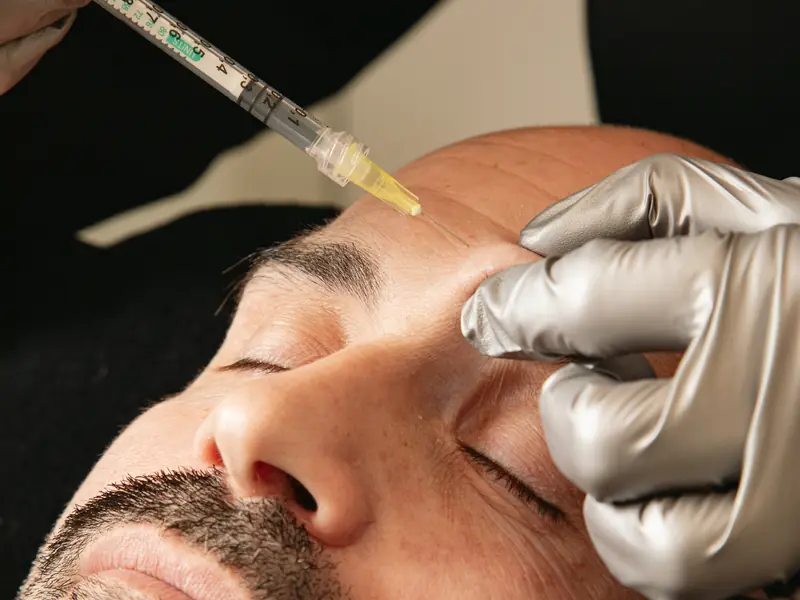
We work from deep to superficial and from structure to detail, with a cannula or a needle depending on the area.
-
Checking the whole
The full result is reviewed, not area by area: from the front, in profile, seated and standing.
-
Review and next phase
At 3-4 weeks the settled result is assessed and it is decided whether to carry out the next phase or move on to maintenance.
What the overall approach adds
- A coherent change across the whole face
- Fewer visits for the same course
- Treating one area and unbalancing another is avoided
- Product distributed according to what is genuinely needed
- A written plan, with order and timings
- The option to stop at the end of each phase
- All without surgery or an operating theatre
- Predictable maintenance over time
Care before and after
Before the session
- Go over medication, allergies and medical history with the doctor
- Stop alcohol 48 hours beforehand, as it is a long, multi-area session
- Postpone if there is an active infection, including a dental infection
- Resolve any dental treatment before the session
- Come having eaten, to avoid feeling faint
- Keep the afternoon free: do not schedule anything straight after the session
After the session
- Apply cold as instructed on the first day
- Sleep on your back with your head raised for two nights
- Avoid sport, sauna and intense heat for 48-72 hours
- Do not wear a helmet, a tight cap or pressing glasses for the first few days
- Postpone dental cleanings and dental treatment for about two weeks
- Daily sun protection while the skin settles
- Come to the review even if you think you look fine
When several areas are treated on the same day the swelling is more obvious than with a single treatment: the face is usually swollen for between two and five days, with possible small bruises and some temporary asymmetry while it goes down. The result is not judged until the review.
Frequently asked questions
Is it the same as facial harmonisation?
They share the approach, but not the scope. Facial harmonisation corrects the points that unbalance your proportions, very selectively. Full face applies that approach to the whole face and adds what is not about proportion: expression, the eye contour, the skin, the neck. If the only thing out of balance is your profile, you do not need a full face.
Is everything done in a single session?
Sometimes yes and sometimes no. Some plans are resolved in one long session with its review, and others are spread over two or three phases weeks apart. The doctor decides according to the number of areas, the technique and your availability.
Does it hurt?
It is manageable, although it is longer than a treatment on a single area. Anaesthetic cream is used, many materials have a local anaesthetic built in, and over much of the face we work with a cannula.
Is it going to change my face?
That is not the aim. We work with the product spread out and in several layers precisely so that no one area stands out. In men we look for structure and a rested appearance, not volume.
How long does what is done in each area last?
It depends on each technique and area: fillers usually last between 6 and 18 months, collagen stimulators work more slowly and for longer, and skin treatments need maintenance. The plan includes how often each thing should be reviewed.
When is the full result visible?
There is a visible change from the first day, but the real result is assessed at 3-4 weeks, once the swelling has gone down and the material has settled.
Can I go back to work the next day?
Most people can, although it is worth planning with some margin. If you have a week with important commitments, it is better to find another date.
What if halfway through the plan I do not want to continue?
Each phase stands on its own. You can stop wherever you want and what has been done will still make sense by itself. Nothing obliges you to complete the whole course.
A plan for the whole face
We study your face as a whole and propose a course in phases, with what it adds and what it does not.
Book an appointmentKeep looking
Injectable facials
-
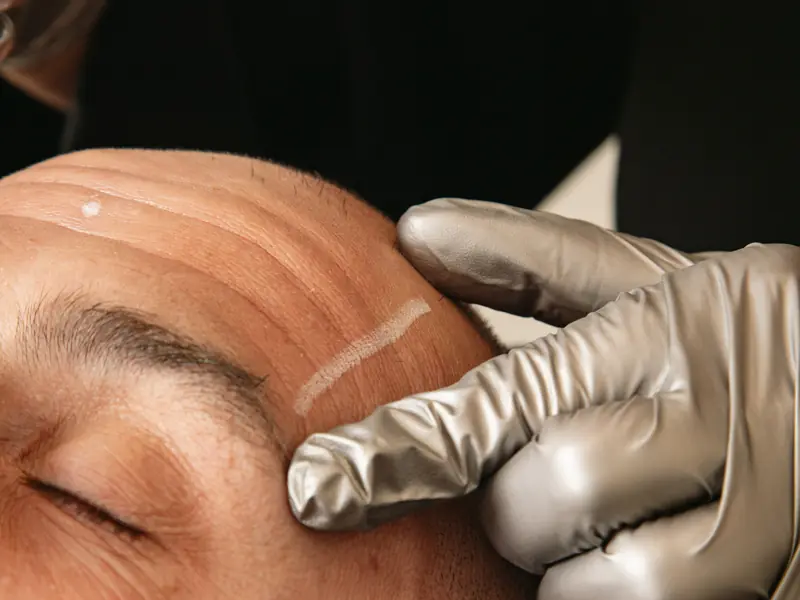 Facial harmonisation
45-60 minutes
-
 Jawline definition
30-45 minutes
-
 Chin correction
20-30 minutes
-
 Cheekbone filler
30-40 minutes
-
 Temple filler
20-30 minutes
-
 Tear trough filler
30-45 minutes
-
 Lip filler and hydration
20-40 minutes
-
 Non-surgical nose reshaping
30-45 minutes
-
 Nasolabial fold
40-60 minutes
-
 Ageing eyes
30-45 minutes
-
 Wrinkle treatment
20-30 minutes
-
 Facial mesotherapy with vitamins
30-40 minutes
-
 Polynucleotides
25-40 minutes
-
 Collagen stimulator (Radiesse)
30-45 minutes
-
 Collagen stimulator (Sculptra)
40-60 minutes
-
 Facial PRF
45-60 minutes
